Why Diamond Tennis Bracelets Still Reign in 2026 | Timeless Luxury & Style Guide
Why Diamond Tennis Bracelets Still Reign In 2026?
In 2026, the diamond tennis bracelet remains a benchmark for personal luxury, timeless heirloom pieces, and the modern “quiet luxury” aesthetic. Sticking to its “day to night” aesthetic, the pull from diamond tennis bracelets is only strengthened by the diamond industry’s shift to lab-grown stones, allowing high-carat diamonds without any sustainability or ethical compromise.
What are tennis bracelets in 2026?
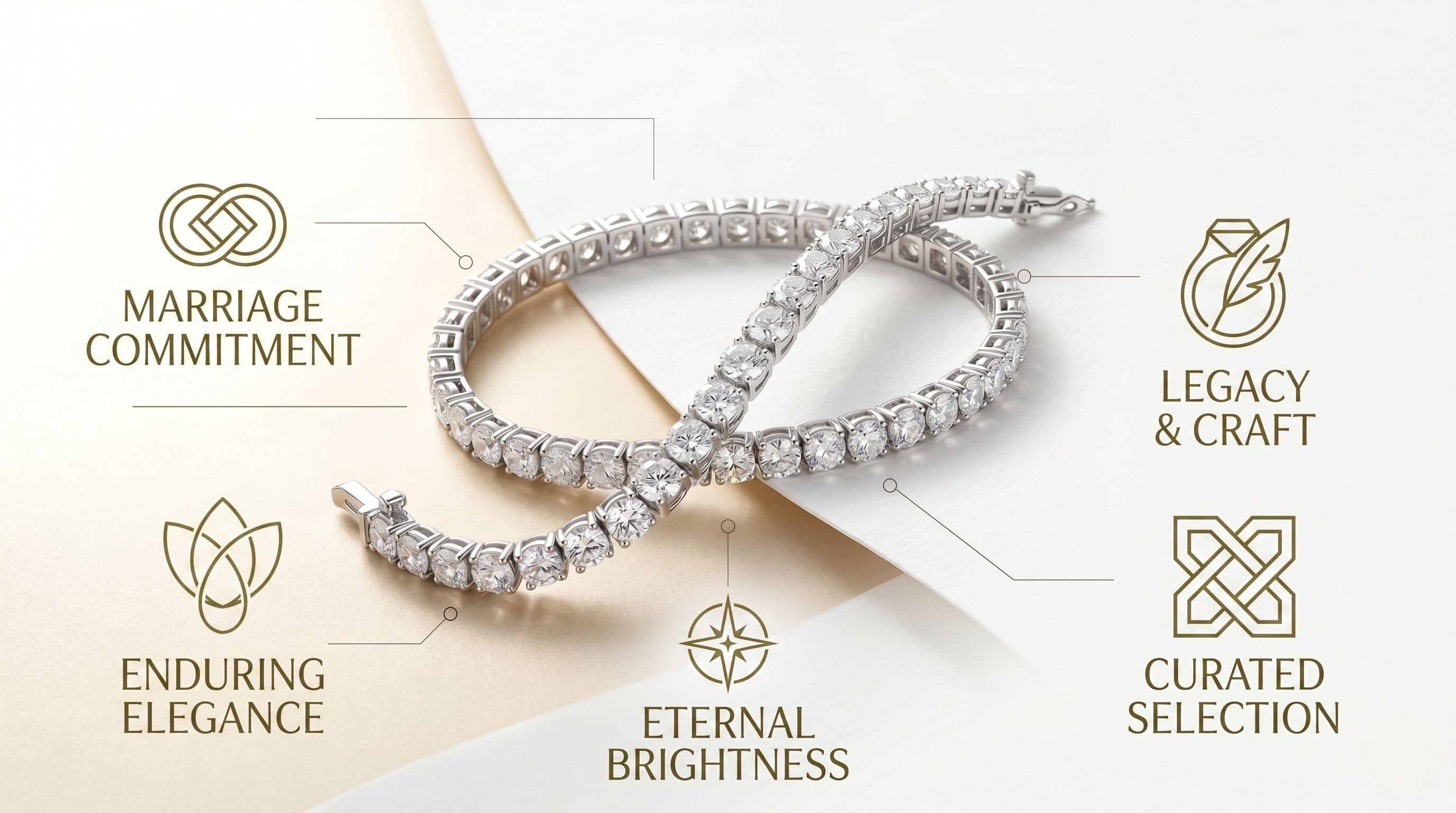
Tennis bracelets are a flexible strand of precious metals and hand-set, uniformly shaped gemstones that are seamlessly designed to sit comfortably on the wrist. The name itself is based on the iconic image of tennis champion Chris Evert's diamond-studded bracelet during the 1978 US Open, but in 2026, it will focus on the features of "Fluidity" and "Low-Profile" settings.
Recently in the UK, the style has become a broad spectrum of various techniques and iterations (between modern styles and classic line styles). The modern styles feature the use of micro-hinges and safety clasps; therefore, line styles can provide the same tennis bracelet functionality. The beauty of a tennis bracelet is that there is no such thing as a "front" or "back" of the bracelet, but an elegant, unbroken, and continuous circle of light.
Why are tennis bracelets so popular in the UK?
.png)
Tennis bracelets are popular in the UK because they resonate with the “investment dressing” ethos, where consumers purchase fewer but more valuable items instead of temporary faddy ones. By 2026, the UK jewellery market will be dominated by “Intentional Stacking”, an example would be layering a tennis bracelet diamond strand alongside a luxury watch.
The “Old Money” trend has heavily influenced this styling as well. British fashion has gone from loud logos to a more “stealth wealth” approach to clothing, where the quality of goods is more implicit. This is where a slim, neatly designed row of tennis bracelets will bring ‘Old Money’ vibes and emphasis to London and Birmingham.
In what ways have lab-grown tools affected the industry?
The technology of lab-grown has affected the industry by democratising high-carat luxury, allowing buyers the ability to purchase larger stones for a lesser price than mined diamonds. In 2026, lab-grown diamonds comprise over fifty-five per cent of the UK market for jewellery, because they are the same as a natural stone, but with a more transparent and eco-friendly supply chain.
Specifically, for the buyer, this ensures a collection of tennis bracelets with diamonds is not limited to the weight of one carat. So it is quite common to find the collection to consist of 10 carats or more. In this, it makes it more common to find the collection to be a daily accessory rather than a single-day accessory and has really solidified itself in the world of fashion.
What differentiates a tennis bracelet from a Tiffany bracelet?
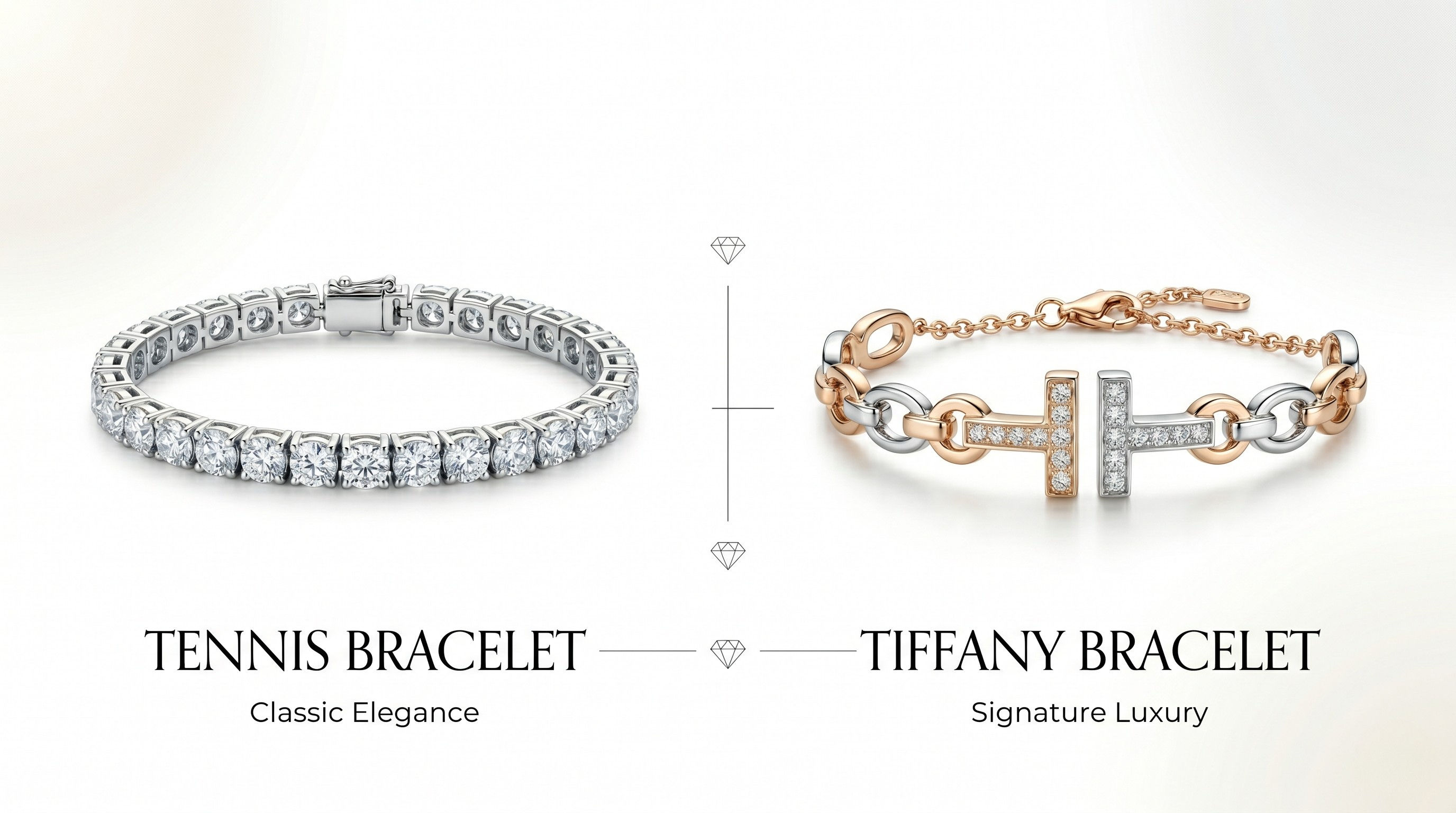
Design and brand allure owing to legacy are the fundamental differences that are used to differentiate between a ‘generic’ tennis bracelet and a Tiffany bracelet. Whereas a tennis bracelet is literally a bracelet with a continuous diamond line, a generic tennis bracelet is typically designed with no particular design, whereas Tiffany bracelets do possess some unique design, such as the "Tiffany Victoria" vine pattern.
By 2026, the trend amongst some UK shoppers is what they describe as the "Tiffany look", a preference for high-grade, colourless diamonds, even when they are choosing independent designers. There is a balance between customer preference for the prestige that comes with Tiffany bracelets and the preference for a custom, independently designed tennis bracelets diamond with more diamond weight (higher carats) for the same price.
How does UK Hallmarking defend your purchase?
UK Hallmarking defends your purchase since it is a legal duty to have a stamp from an Assay Office in either London, Sheffield, Birmingham, or Edinburgh about the purity of metals in their products when it comes to expensive metal items over a particular weight (gold, silver, platinum, palladium). When shopping for UK products, such as tennis bracelets, it is in your best interest to ensure the product has the three marks: A Fineness mark, an Assay Office mark, and a Sponsor's mark. Being able to check for these marks can help to make an informed decision when investing in authentic diamond tennis bracelets. Additionally, Tiffany Bracelets from this luxury brand or other segment-related products may contain their own in-house or specific hallmarkings alongside the official UK stamps.
Which is better for a diamond setting: a prong setting or a bezel setting?
In case of an active lifestyle that exposes one to the likelihood of diamond stones being chipped, a bezel setting will be better; however, with a prong setting, the diamond's brilliance will be maximised. From 2026, the security of a bezel setting and the brilliance of prong settings will be provided in the 'Hybrid Settings'.
- • Prong Setting: Diamond is held in place with small metallic claws, as done with tennis bracelets diamond and it is the most ideal design as such, besides allowing maximum light entry.
- • Bezel Setting: A diamond is surrounded by a metallic rim in this design, making it simple, modern, and particularly suitable for the cold temperatures of the UK. A prong setting that will be caught on knitwear while browsing among tennis bracelets will be a critical decision.
What are the maintenance requirements for a diamond bracelet?
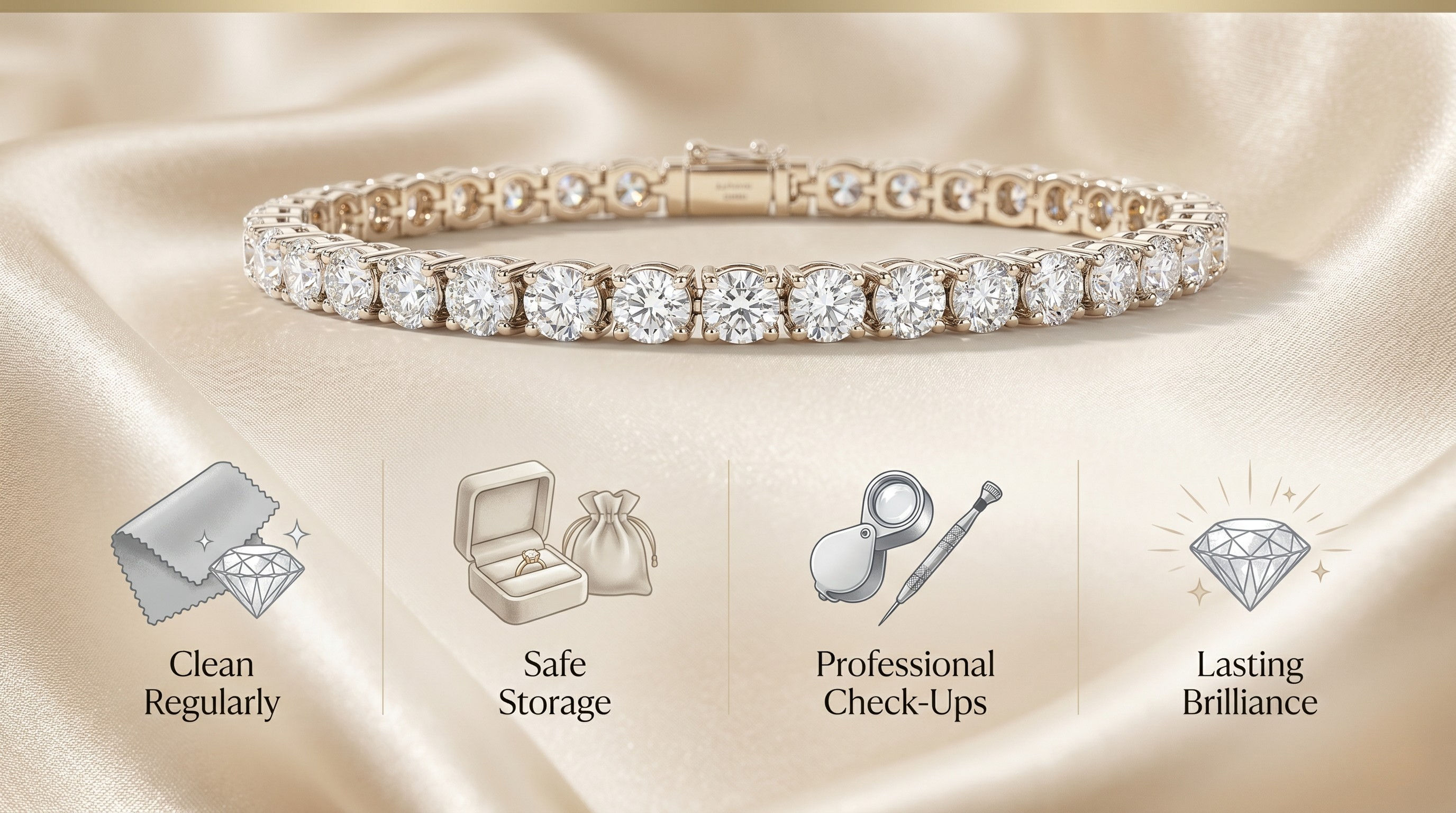
Maintenance requirements include a gentle cleaning at home every fortnight for the removal of skin oils, along with a professional cleaning once a year, "prong-checking." You can clean it by Ultrasonic cleaning. So, it should not be a major thing if you are in the UK. Juweler's is offering free ultrasonic cleaning for life.
When you store it, please keep it flat, not hanging over the edge. It is not a major thing if you put it with other Tiffany bracelets. But you should be aware that it can cause the metal links to stretch or stress over time. Tennis bracelets, diamond piece? Better keep it clean. The river of light thing is no joke. It should remain for decades.
What Makes 2026 The New Age of Customisation?
Noticing what the UK has to offer, it seems that UK buyers prefer pieces that tell a specific story. Offering bespoke pieces has rightfully replaced the "off-the-shelf era." The new trend is using pieces from older Tiffany Bracelets and giving them a new life by resetting them to fit into modern graduated tennis bracelets.
Modern Customisation Options:
- 1. Mixed Cuts: Combining round diamonds with emerald cuts in one row.
- 2. Bespoke Lengths: tennis bracelets diamond should be a snug fit and limited in sliding up and down the wrist.
- 3. Metal Choice: 18ct Yellow Gold is seeing a massive revival in 2026.
Conclusion: The Enduring Majesty of the Diamond Tennis Bracelet
The diamond tennis bracelet of 2026 has shown it can adapt to the wearer. Reflecting the 'Quiet Luxury' philosophy of the modern UK consumer, diamond tennis bracelets signify a belief in craftsmanship over mass market aesthetics. Through a balance of design and functionality, bracelets designed with the technological advancements of synthetic diamonds and with a deep respect for the tradition of jewelry craftsmanship, provide a Jewel-Concierge worthy investment. Whether you want a tennis bracelet inspired by the history of Tiffany Bracelets or a custom diamond design for a tennis bracelet, the flexibility in craftsmanship comes first. In 2026, one thing is for sure: investing in a bracelet will get you a timeless, classic piece set to last for years to come.
Frequently Asked Questions
How did "Tennis Bracelet" come about? ▼
In 1978, Chris Evert lost her diamond line bracelet mid-match. Before that, they referred to them as "eternity" or "line" bracelets.
Do lab diamonds count as real? ▼
Yes. In 2026, they will be legally classified as real diamonds. They are the same as the mined stones in structure and hardness (10).
How much should you spend on tennis bracelets in the UK? ▼
Examples of these include an 18ct gold tennis bracelet with lab-grown diamonds starting at approximately £1,500. If you want a natural diamond tennis bracelet, brace yourself to budget from £4,000 to £6,000.
Should Tiffany bracelets be seen as an investment? ▼
Yes, because of the quality of their diamonds and the prestige of the brand, the bracelets hold their value well as they enter the secondary market.